The Arts Society Paris Programme 2024-2025
These illustrated lectures are delivered in English by leading European speakers, all experts in their fields.
All lectures start at 14:00 CET unless otherwise stated.
Lectures are held at:
Théâtre du Ranelagh
5 Rue des Vignes
75016 Paris
Reduced mobility entrance at 2 bis rue des Maronniers.
Metro: La Muette | RER C: Boulainvilliers | Bus: 52, 22
Guests are welcome to attend these lectures. The lectures are free to members of PADFAS and to members of The Arts Society. Other guests may attend for a fee of 15€: contact paris@theartssociety.org for details.
You can pick up a paper copy of the programme at the AGM or at any lecture.
Thursday 10th October 2024
14:00 ANNUAL GENERAL MEETING
The convocation to the AGM will be sent individually to members.
14:30 HANS HOLBEIN THE YOUNGER – portraitist of the Renaissance (1497-1543).

In this lecture we will explore this phenomenal artist who through his portraits esp. of Henry VIII, his wives and courtiers have done so much to determine our image of this turbulent time. We will examine the life and career of this 16th century expat who travelled to many countries in pursuit of his career. But what makes his work so special? Why are his portraits so intriguing and fascinating for so many people? Is it his unbelievably refined technique and the beautiful use of colour which he used to make his paintings come to life? Or is it his talent to reveal the characters of these people so mercilessly? His portraits of famous scholars. traders and Henry VIII and his marriage candidates and courtiers show us people of flesh and blood: powerful personalities, erudite, good natured. industrious or vulnerable, but also people who radiate cunning and deceit.

Jane E. Choy-Thurlow is a docent and enjoys giving lectures and tours at the Mauritshuis, Prince William V gallery and Huygens Museum Hofwijck in The Hague, The Netherlands. A few of the many exhibits in the Mauritshuis she has been part of are: the legendary Johannes Vermeer exhibit, Rembrandt by Himself and Holbein, Portraitist of the Renaissance.
by Jane Choy Thurlow
Thursday 14th November 2024
THE ENIGMA OF EDWARD ELGAR.

Brought up in a provincial town, Elgar was completely self-taught as a musician. His path to recognition was hard and bitter. He had to contend with the prejudices of the British musical establishment, religious bigotry and the class consciousness of late Victorian provincial society. He was a contradictory musician, wracked with self-doubt. For many, his music expresses a quintessential Englishness.
By Roger Askew
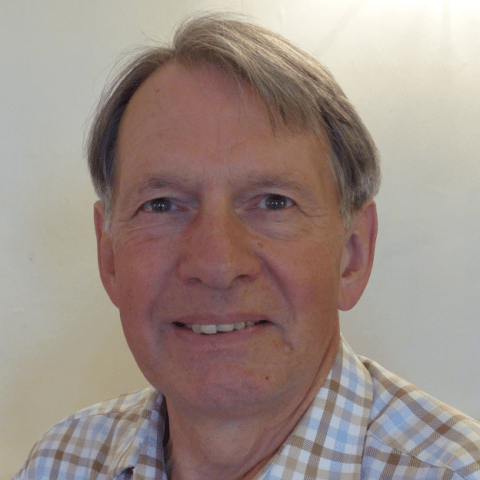
Roger Askew was a chorister at Wells Cathedral School and a choral scholar at Magdalen College, Oxford, where he graduated with an honours degree in English. He combined a teaching career with professional singing in London, and after obtaining a further degree in Music became Director of Music at Daniel Stewart’s and Melville College in Edinburgh. After retiring in 2003 he returned to the south of England. He is President Emeritus of The Stoke Poges Society.
Thursday 12th December 2024
THE ART OF RABINDRANATH TAGORE (1861-1941)
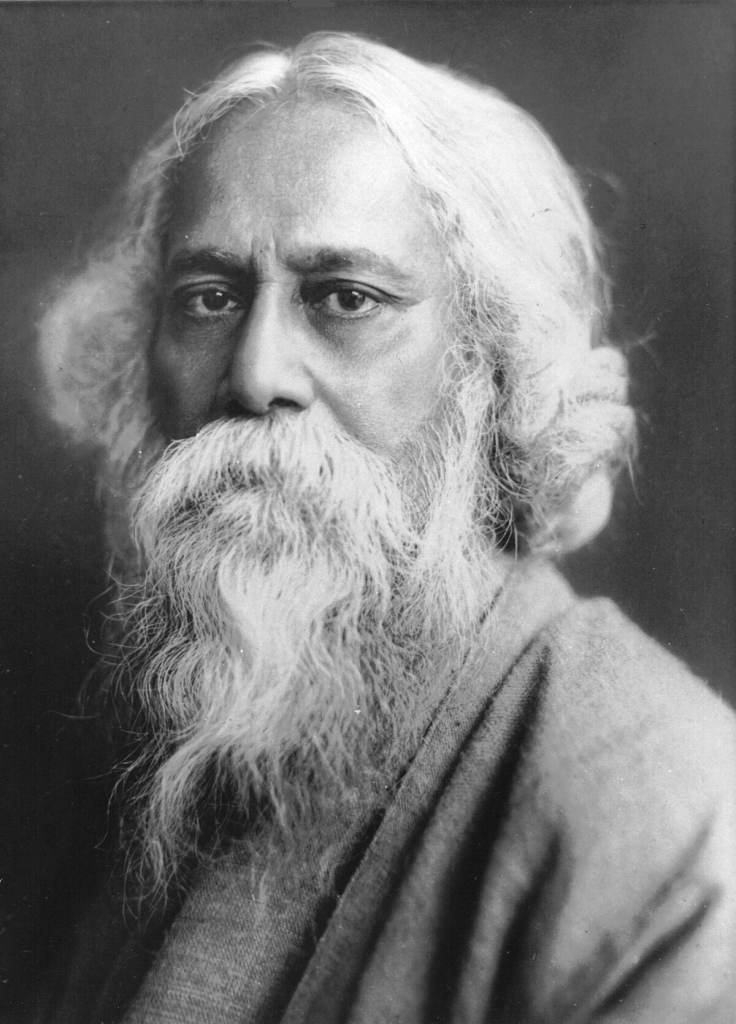
Rabindranath Tagore (1861-1941) is arguably the most important Indian artistic figure of the modern era. The first Prime Minister of India, Jawaharlal Nehru, claimed that he had two gurus: Gandhi and Tagore. A renowned poet, novelist, composer and painter, Tagore is also the only person in history to have written the national anthems for three countries (India, Sri Lanka and Bangladesh). He became a global sensation when he won the Nobel Prize for Literature in 1913, the first non-European to do so. This lecture provides an introduction to Tagore’s remarkable life and work, including his novels, poetry, songs and paintings.
By Dr John Stevens

Dr John Stevens gained his PhD in History from UCL, before going on to teach British Imperial History, Indian History and Bengali Language at the School of Oriental and African Studies (SOAS, University of London). His biography of the Indian guru Keshab Chandra Sen – Keshab: Bengal’s Forgotten Prophet – was published by Hurst and Oxford University Press in 2018. He is a regular visitor to India and Bangladesh and has lectured at numerous Indian universities. He also works as a consultant on Indian affairs and teaches the Bengali language to private students. He has appeared many times in the Indian media, and was a guest on BBC Radio Four’s In Our Time, discussing the poet and artist Rabindranath Tagore.
Thursday 9th January 2025
THE JURASSIC WORLD OF MARY ANNING
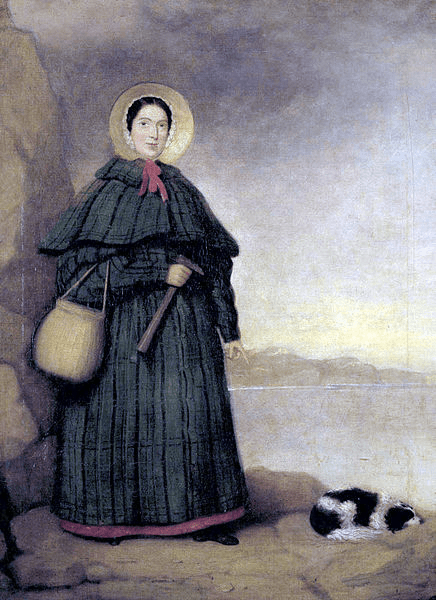
Let me introduce you to 19th century palaeontologist Mary Anning and discover how she searched the Jurassic rocks of England’s south coast to unearth what where believed to be sea dragons and we now call marine reptiles. We will look the social history and influences of Mary and the 19th century scientists that she would have worked with. We will not only look at these spectacular fossil remains, but also see how palaeontologists have revealed how these ancient extinct animals lived.
By Dr Aaron Hunter

I am a professional scientist and researcher with the University of Cambridge and a prize-winning London Blue Badge Guide, a Green Badge Guide for the City of London and Oxford, and a City of Bath Mayor’s Guide. As a palaeontologist, I am an expert on fossils and prehistoric life from the first animals to appear on our planet to the evolution of early humans. I have published research on the origin of marine animals 480 million years to the Jurassic World. After degrees in Geology & Palaeobiology, I gained my PhD from the University of London and went on to pursue an academic career working first as a research fellow in France, Germany and Japan and then as a Senior Lecturer in Malaysia and Western Australia. I have a passion for archaeology, history, architecture and the history of art. I give lectures that encompass these subjects looking at the interface between the arts and sciences.
Thursday 6th February 2025
PHILADELPHIA

-Where William Penn renewed once again the essentially utopian nature of America.
-Where on two occasions the colonies invented the United States of America.
-Where Benjamin Franklin honed his model of the American intellectual.
-Where the Barnes Foundation eventually settled close to the magnificent Museum of Art.
By Christian Monjou

Research professor at Oxford, former laureate of the Besse Foundation, Christian Monjou is a specialist in Anglo-Saxon civilisations. He was for a long time professeur de chaire supérieure en khâgne at the Lycée Henri IV in Paris and lecturer at the École Normale Supérieure in the Rue d’Ulm.
Thursday 13th March 2025
THE CLASSICAL RE-INVENTED: the splendid legacy of Sir Christopher Wren.
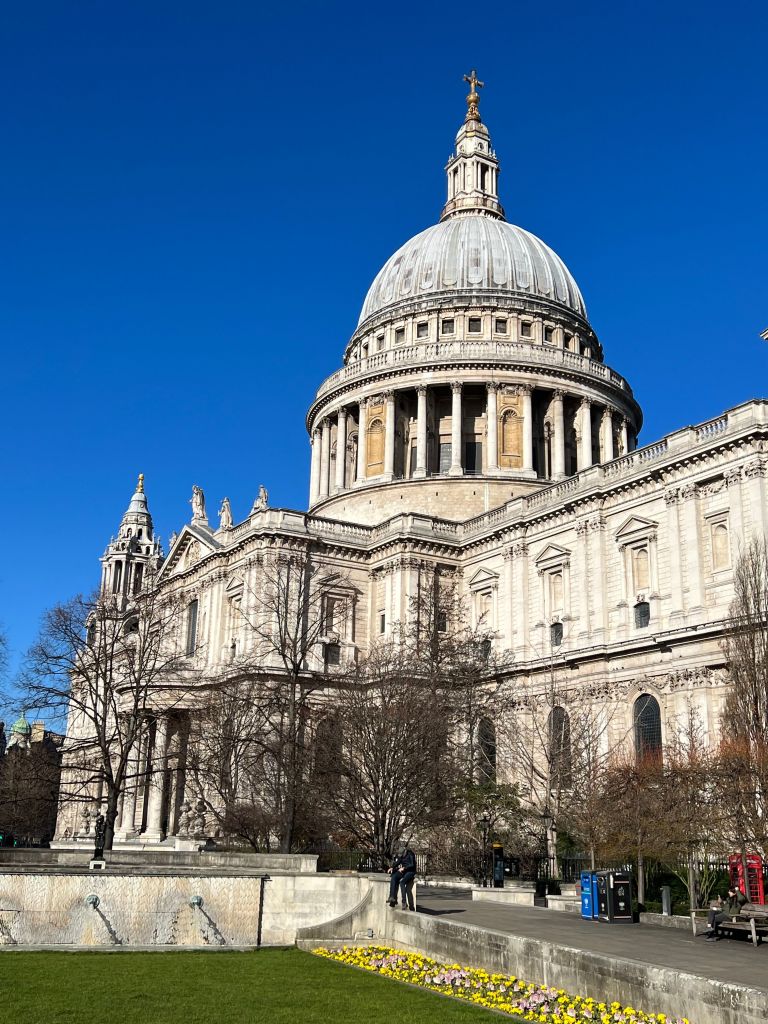
In this talk we wind the clock back to the seventeenth century and enjoy an armchair tour of some of Wren’s magnificent structures including City Churches, the Old Royal Naval College at Greenwich and, of course, his greatest masterpiece St Paul’s Cathedral. Wren was primarily a mathematician and astronomer and we’ll see how these disciplines are harnessed in his work. We will also look at the origins of the classical orders of architecture and discover how Wren’s love of this ancient system is everywhere to be seen in his legacy.
By Ian Swankie

A Londoner with a contagious enthusiasm for art and architecture, Ian is an official guide at Tate Modern, Tate Britain, Guildhall Art Gallery and St Paul’s Cathedral. He is also a freelance London tour guide. Since 2012 he has led a popular weekly independent art lecture group in his home town of Richmond in West London. He is an Accredited Lecturer for The Arts Society and a Freeman of the Worshipful Company of Art Scholars, one of the City livery companies.
Thursday 10th April 2025
WINTERHALTER AND WORTH – The mid-19th century’s masters of design and draughtsmanship.
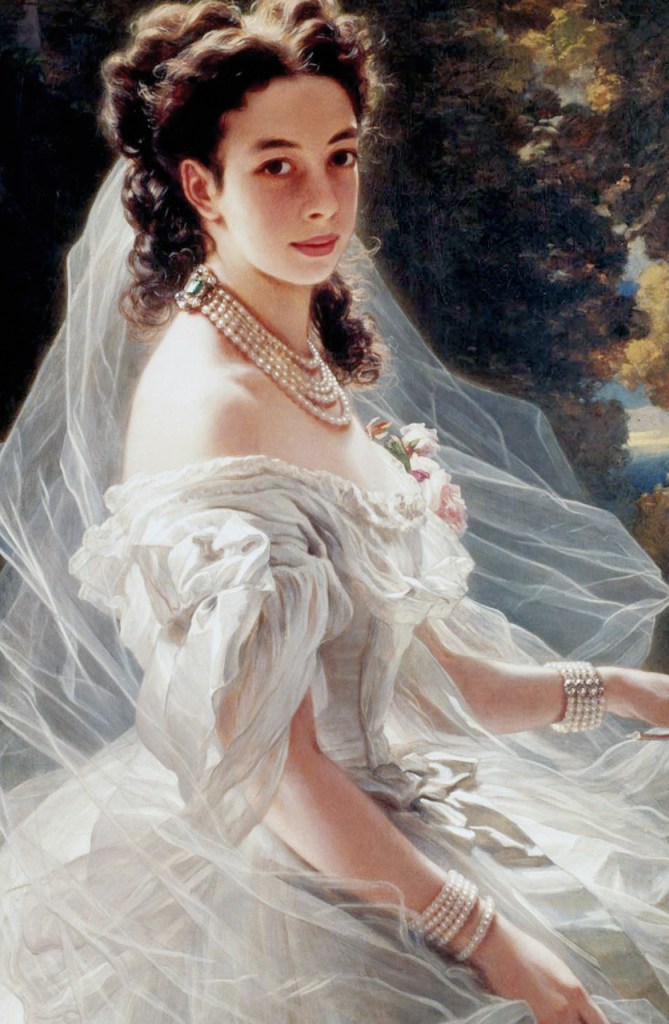
Two disciplines-art and fashion-continuously overlap throughout our cultural and social history. The exceptional talents of German-born artist Franz Xaver Winterhalter and English-born Parisian couturier Charles Frederick Worth defined an era thanks to these masters of design and draughtsmanship.
German-born artist Franz Xaver Winterhalter painted portraits of the rich, powerful and fashionable courts of 19th century Europe. English Couturier Charles Frederick Worth established his couture house in Paris in 1858 and soon became official couturier to the Empress Eugénie, consort of Napoleon III. Worth and Winterhalter may not have directly worked together, but they shared a client list that boasted the aristocracy and crowned heads of Europe during the mid-19th century. Whereas one man depicted the finest and most luxurious fabrics in paint, the other sculpted these fabrics into ethereal gowns for the fashionable elite.
By Scott Schiavone
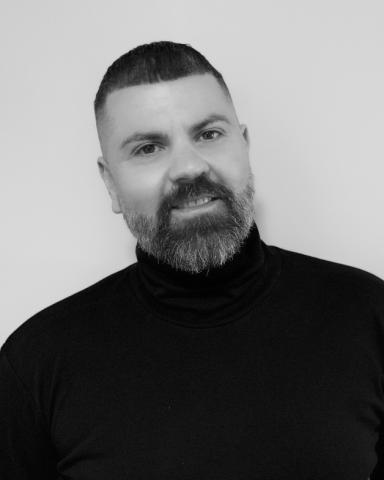
Scott William Schiavone is a Fashion Historian and Curator. Scott is both University of Glasgow and London College of Fashion alumni having graduated from the MA (Hons) History of Art and MA Fashion Curation in 2004 and 2010 respectively. Scott has worked with fashion and textile collections across the UK, including Glasgow Museums, National Museums Scotland and The Harris Museum in Preston where he is currently the Decorative Art Curator. Scott has his own YouTube channel, Fashion &…which now has over 5,500 subscribers. His areas of expertise are nineteenth and twentieth century French, British and American womenswear, luxury fashion accessories and marginalised social histories of fashion.
Thursday 15th May 2025
SCANDINAVIAN MODERN: Behind the scenes.
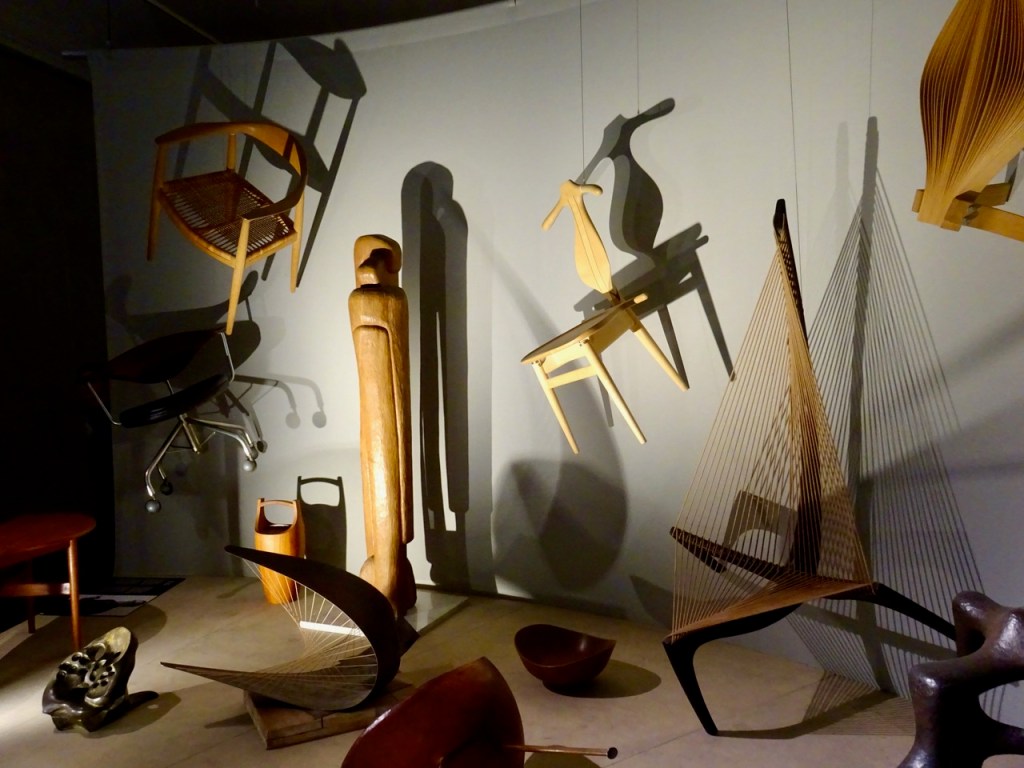
Just why did Scandinavian modern design become so popular in the mid-century and how did it turn from a revolutionary movement into just another style? And was there a dark side to it? Lurking in the shadows was a Nordic project to change consumer taste and shape the model citizen using scientific experimentation and social engineering.
By James Vaux

James Vaux is a researcher and lecturer specialising in Nordic arts, culture, design and history. He has presented extensively on diverse topics throughout his career to demanding audiences across the globe, including CEOs and government ministers. His talks now focus on understanding artistic achievements through their historic, cultural and political context.
James aims to question the underlying narratives behind artists, designers and movements, to explore the ‘why’ and the ‘how’ instead of the conventional ‘who’, ‘what’ and ‘when’ . A truly gripping Arts Society talk needs a mystery to be solved, not a chronological series of items and events.
James gained an MA (Distinction) at UCL in Language, Culture and History (Scandinavian Studies). His dissertation was on Swedish design, and he specialised in landscapes, the Viking Age, politics and literature.
He has also studied interior design and art history at the Inchbald School, Mid-Century Modern at Sotheby’s Institute and electronic music at Point Blank. He hosted a local radio show for four years. He lectures and provides study days focusing on Scandinavian Modern design, Danish design, Norse mythology, Icelandic literature, Swedish literature, the Modern Breakthrough in Nordic culture and the role of modernism in the Cold War.
Click here to see last session’s lectures.
 PADFAS