The Arts Society Paris Programme 2025-2026
These illustrated lectures are delivered in English by leading European speakers, all experts in their fields.
All lectures start at 14:00 CET unless otherwise stated.
Lectures are held at:
Théâtre du Ranelagh
5 Rue des Vignes
75016 Paris
Reduced mobility entrance at 2 bis rue des Maronniers.
Metro: La Muette | RER C: Boulainvilliers | Bus: 52, 22
Guests are welcome to attend these lectures. The lectures are free to members of PADFAS and to members of The Arts Society.
Other guests may attend for a fee of 20€: contact paris@theartssociety.org for details.
You can pick up a paper copy of the programme at the AGM or at any lecture.
Thursday 16th October 2025
14:00 ANNUAL GENERAL MEETING
The convocation to the AGM will be sent individually to members.
14:30 Sibelius and the Birth of Finland

This lecture explores the crucial role played by the music of Sibelius in forging Finnish cultural identity prior to the country’s independence in 1917. As with so many Finnish artists, including the painters Eero Järnefelt and Akseli Gallen-Kallela, Sibelius found inspiration in the ancient runes of the Kalevala, the national epic. Iconic works such as Finlandia will be discussed in the context of the emergence of a National Romantic style in Helsinki, and the architecture of Eliel Saarinen and Alvar Aalto.
by Rosamund Bartlett

Rosamund Bartlett is a writer, lecturer and translator whose work ranges across the arts, and across the cultures of Europe, from Italy to Norway. She began her career as an academic in Slavic studies after completing her doctorate at Oxford, and has held fellowships both in the UK and at the European University Institute in Florence. In 2024 she became a Royal Literary Fund Fellow at Brasenose College, Oxford.
Thursday 13th November 2025
Wilde About Oscar: Famous for Being Famous (& Infamous) 1854-1900

This lecture examines the extraordinary life and dramatic times of Oscar Wilde from his Irish roots to his days as a student at Oxford and his meteoric rise to the heights of celebrity. We travel with him to the United States and examine his starring role within the artistic & theatrical worlds of late 19th century London. We visit his home in bohemian Chelsea and some of his favourite West End haunts. Finally, we learn how ‘tired of being in the heights, he plunged into the depths’ and became famous for being INfamous…
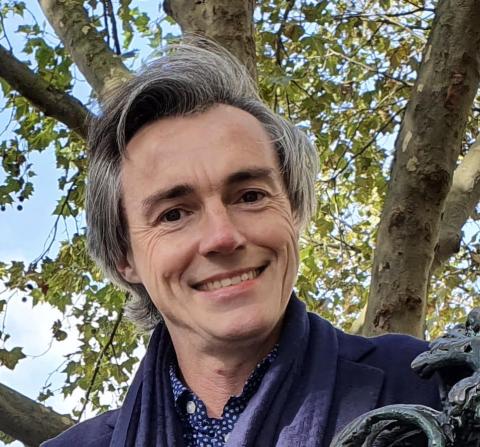
Simon is a (recovering) actor, lecturer, presenter, Alexander Technique and voice teacher and award winning London Blue Badge guide. He has worked as a guide lecturer in house at Shakespeare’s Globe, the Royal Opera House, the BBC and the National Gallery guiding both public and private tours. He is on the faculty of Ithaca College and also lectures for the Blue Badge Guide training course on the performing arts and English literature. Simon’s specialisms and passions are theatre, literature, fashion and art history but whatever the subject, Simon will weave a wonderful story from it.
Thursday 11th December 2025
Snow and Ice, Holland frozen in time

Whereas nowadays Dutch winters tend to be rather mild, in the 17th century there were lengthy periods of frost. Unfortunately typical old-fashioned Dutch winters with severe frosts, thick layers of snow and frozen lakes and canals with everyone skating have become rare. But these Dutch winters of bygone times were captured in paintings by the great masters of the Dutch Golden Age. In the comfort of a warm interior I would like to show you how this typically Dutch genre developed and talk about some of the famous works by artists such as Hendrick Avercamp, who specialised in winter landscapes, but also Jacob van Ruisdael, Jan van Goyen and even Rembrandt who showed the traditional Dutch landscape at its coldest.
By Jane Choy-Thurlow
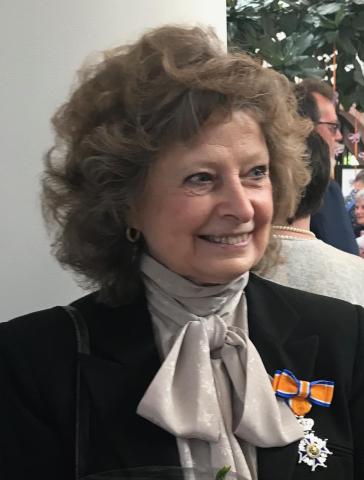
Jane E. Choy-Thurlow is a docent and enjoys giving lectures and tours at the Mauritshuis, Prince William V gallery and Huygens Museum Hofwijck in The Hague, The Netherlands. A few of the many exhibits in the Mauritshuis she has been part of are: the legendary Johannes Vermeer exhibit, Rembrandt by Himself and Holbein, Portraitist of the Renaissance. An active member of The Arts Society, she is a founding member of DFAS of The Hague and has fulfilled committee positions including chairman and Mainland Europe Area Chairman, Area Trainer and New Societies/Support committee member. She received her BSc from Salem State University, USA, her MEd from Trinity College Dublin and continued art history studies at Leiden University. In 2018 she was given the honour of Knight in the Order of Oranje Nassau by the Dutch King Willem Alexander of Orange for her knowledge and work in the field of the Arts especially 15th to 17th century Dutch and Flemish art.
Thursday 8th January 2026
The Bloomsbury Group
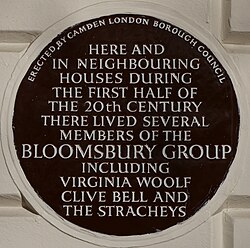
The contribution of the BLOOMSBURY Group to the modernist phase of English literature is well known, even if too often reduced to one name only, that of Virginai WOOLF.
The “art of BLOOMSBURY” was characterised by three aspects :
– A theoretical one, represented by Roger FRY and Clive BELL;
– what could be called “the CHARLESTON workshop” with three essential presences linked by complex relationships: Vanessa BELL, Duncan GRANT and Roger FRY;
– and finally its contribution to the field of Decorative Arts with the OMEGA WORKSHOPS.
By Christian Monjou

Research professor at Oxford, former laureate of the Besse Foundation, Christian Monjou is a specialist in Anglo-Saxon civilisations. He was for a long time professeur de chaire supérieure en khâgne at the Lycée Henri IV in Paris and lecturer at the École Normale Supérieure in the Rue d’Ulm.
Thursday 12th February 2026
Andy Warhol: Behind the surface of the superficial: “Popping” the bubble
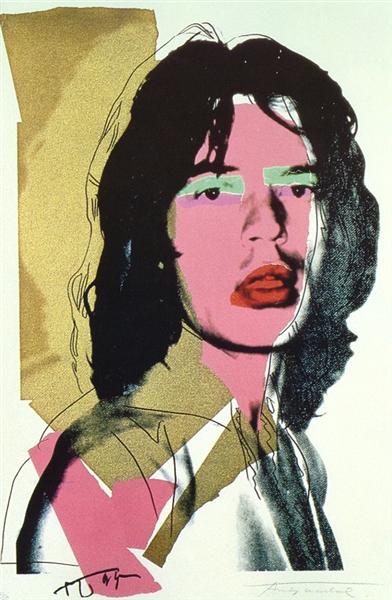
Warhol claims: “Just look at the surface of my paintings and films and me, and there I am. There’s nothing behind it”. His ‘Zen koan’ statement begs closer investigation. If we keep in mind, for example, Warhol’s near-death experience after being shot in 1968 while looking at the images of Widowed Jackies and Electric Chairs as well as the Camouflage Last Suppers of his later years, we see that his art is anything but superficial. My talk will highlight revelations from Andy’s early biography that trace his awareness of the Buddhist concept of emptiness and of infinite repetition as well as his ardent practice of Byzantine Catholicism and how he applied both to his artwork. The depth of Warhol’s message finally comes out. Such a study is a must for anyone interested in Pop Art as well as American art in general.
By Deborah Jenner

Deborah Jenner is an American-born art historian; member of College Arts Association. Residing in Paris since 1990, she has worked at the Ecole du Louvre, the Sorbonne, the Catholic Institute and the British Council. Her Doctorate thesis proved non-western influences in Georgia O’Keeffe’s art. Her publications include catalogue essays for Musée d’Orsay (New York City et l’Art modern) and Centre Pompidou (Les Traces du Sacré), scholarly papers with the research laboratory S.A.R.I. and Gallery critiques in ArtAsiaPacific, and PerformArts: Artvisuel-Artvivant. She gives public talks, guided walks and museum tours for ex-pat organisations and study-abroad programs and volunteers as an Al Gore Climate leader and JCF Round Table coordinator.
Thursday 12th March 2026
Faber and Faber – 90 years of excellence in cover design
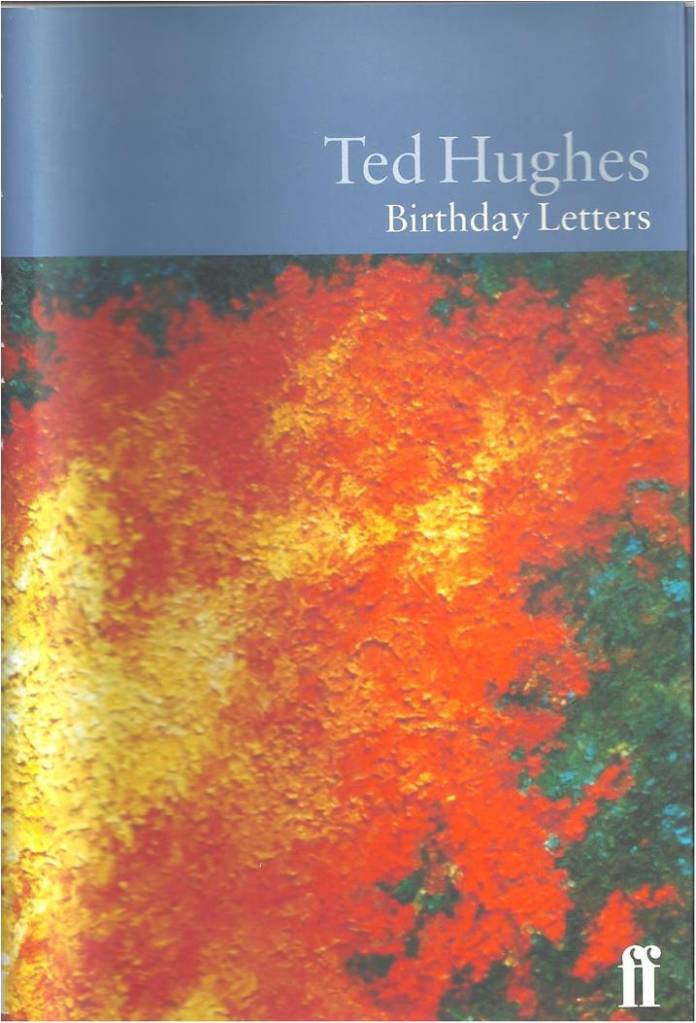
The founder’s grandson tells story of the publisher, Faber & Faber, and of the art used on its books, from its beginnings to the present day.
Since its foundation in 1925, Faber and Faber has built a reputation as one of London’s most important literary publishing houses. Part of that relates to the editorial team that Geoffrey Faber and his successors built around them – TS Eliot was famously an early recruit – but a large part is also due to the firm’s insistence on good design and illustration. Early years brought innovations like the Ariel Poems – single poems, beautifully illustrated, sold in their own envelopes – and contacts with some of the great artists of the inter-war years. From the 1940s, there was an emphasis on typography, led by the firm’s art director Berthold Wolpe; his Albertus font is still used on City of London road signs. In the 1980s, the firm started its association with Pentagram, responsible for the ff logo. Along the way, it has employed some of our most celebrated artists as cover illustrators – from Rex Whistler and Barnett Freedman to Peter Blake and Damien Hirst.
By Toby Faber
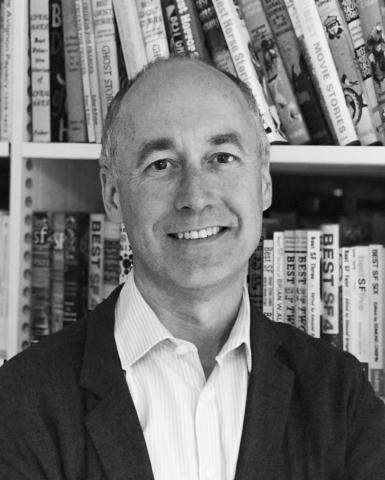
Toby is an experienced lecturer and public speaker who has been accredited by The Arts Society since 2012. His career began with Natural Sciences at Cambridge and has been through investment banking, management consulting and five years as managing director of the publishing company founded by his grandfather, Faber and Faber, where he remains on the board. He is also non-executive Chairman of its sister company, Faber Music and a director of Liverpool University Press. Toby has written three narrative histories: Stradivarius – Five Violins, One Cello and a Genius; Faberge’s Eggs; and Faber & Faber – The Untold Story, as well as a novel, Close to the Edge. Of these, only the obvious one is published by the family firm.
Thursday 16th April 2026
Unravelling the Silk Road.

Wool, cotton and silk have each played a crucial role in the fortunes of Central Asia. Wool created the clothing and housing needed by the great nomadic cultures that were to dominate Middle Asia. Silk was more valuable than gold and used as currency, creating a network of trading routes that led to the first outbreak of globalisation. Cotton was the cause of Russian and then Soviet Colonisation and continues to cause controversy today as well as human misery and environmental catastrophe The felts, carpets, embroideries, robes and veils of the Silk Road stratified wealth, displayed religious and political entrenchments and changed the fortunes of this fascinating part of the world; a meeting place between Mohammed and Marx. STUDY DAY This is an expanded version of the one-hour lecture, this time devoting an hour to each textile; wool, cotton and silk, exploring their impact on the history, economy, geography, politics and, of course, fashions of Central Asia and the wider world. Keep scrolling down for more details.
By Chris Aslan

Chris Aslan was born in Turkey and was raised there and in war-torn Beirut. This set him on a course for an adventurous life and he has spent two years at sea, and lived in Central Asia for 15 years. He started off in Khiva, a desert oasis in Uzbekistan, establishing a UNESCO workshop reviving fifteenth century carpet designs and embroideries, and becoming the largest non-government employer in town. He was deported as part of an anti-Western purge, and took a year in Cambridge to write A Carpet Ride to Khiva. Chris then spent several years in the Pamirs mountains of Tajikistan, training yak herders to comb their yaks for their cashmere-like down. Next came a couple more years in Kyrgyzstan living in the world’s largest natural walnut wood and establishing a wood-carving workshop. Since then, Chris has studied and rowed at Oxford and now divides his time between lecturing for the Arts Society, writing fiction and non-fiction in his mountainous home overlooking the sea in North Cyprus where he is overrun by cats, and returning to Central Asia to lead tours whenever he can, having left a large chunk of his heart there. His latest book is Unravelling the Silk Road.
Thursday 7th May 2026
The Honourable East India Company and East-West Trade: Chintz, Chinese export and Chinoiserie, 1600–1800
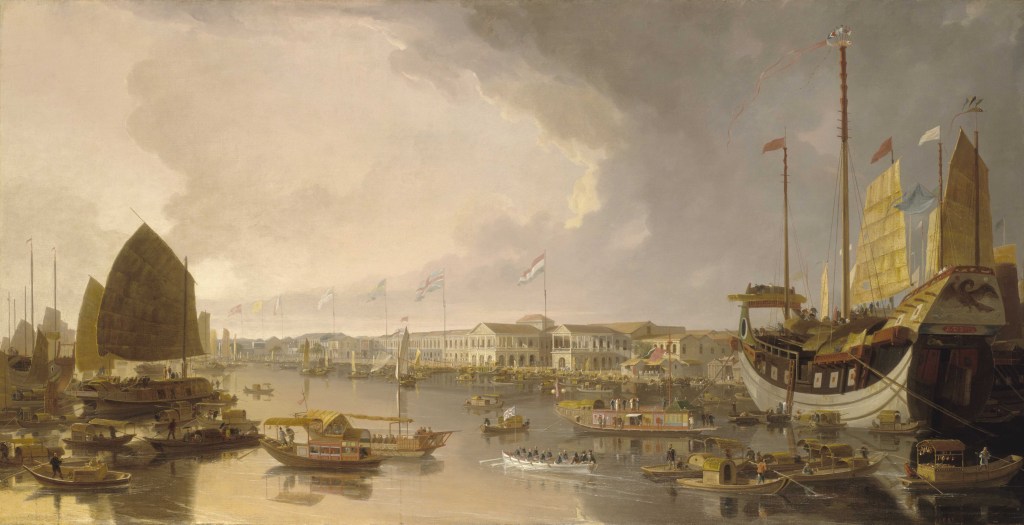
This lecture explores the way in which the East India Company developed its methods of trade and facilitated the increasingly sophisticated and profound exchange of ideas between East and West. It focuses on textile design as the vehicle for this analysis, but also includes other works, such as wallpaper, porcelain and furniture, as well as the vast commercial trade in spice and tea. Examining first the 17th century textile trade with India, the lecture shows how the East India Company established a methodology for sending out patterns to be copied by the local weavers and dyers, paving the way for the production of chintz – now considered to be a classic expression of English style. The lecture then turns to the 18th century and the trade with China. Using the same methodology of sending out Western patterns to be copied for export goods, the Company rapidly expanded operations in the Far East. The currency and balance of trade with China is examined, and methods of production are illustrated with a number of Chinese export pieces, predominantly Chinese painted silks but also including furniture and porcelain. The distinction is then drawn between Chinese export and Chinoiserie, a fantasy style produced by Western artists and designers based on the exoticism of China – known to Westerners as ‘Cathay’ – and combining with the prevailing Baroque and Rococo styles in Western designering.
By Vivienne Lawes
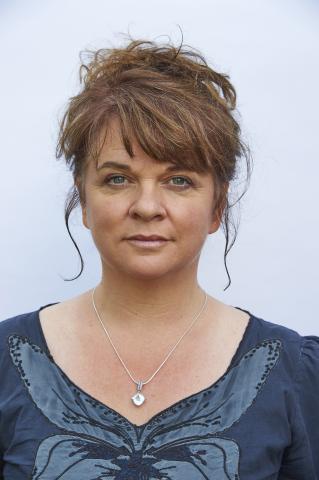
I am an art historian, curator, author and journalist with over 25 years’ experience in the art market. I teach at several Higher Education institutions, including the University of the Arts London, Sotheby’s Institute of Art, the City & Guilds of London Art School, SOAS (University of London) and Imperial College. In January 2021 I received the Geoffrey Bond Bursary for Art, an annual prize awarded by the Worshipful Company of Educators to an “outstanding educator” nominated by their institution.
My articles, essays and reports have been published in numerous specialist journals, newspapers, catalogues, handbooks and websites, aimed at both the academic and general readership in print and online.
Click here to see last session’s lectures.
 PADFAS